Moving from California to Sarasota: An Honest Guide from a Sarasota Native
California-to-Sarasota moves are driven by equity math and a 13.3% top income tax rate. A Sarasota-native Realtor who's closed a Palm Springs deal through the Bureau of Indian Affairs breaks down the real numbers, neighborhoods, costs, and residency checklist.
California isn't the first state most people picture when they picture Florida relocation, but the flow is real and it's grown every year. The story is usually equity math: a house bought decades ago for a fraction of what it's now worth, sold at or near the top, and a genuine question about what to do with the number that's left over.
Here's why California sellers work with me specifically. I've handled a California relocation deal out of Palm Springs that required working through the Bureau of Indian Affairs (BIA) on the sale side, because the home was located on Indian-owned land. That's a procedural layer the vast majority of Florida Realtors will never encounter in an entire career — federal-agency review, non-standard extension clauses, and closing timelines that don't run on the normal 30-day clock. Coordinating a Florida purchase timeline against a California sale that's moving through federal review is genuinely different work than a standard interstate move, and it's work I've already done.
That matters because California relocation deals are almost never routine. They often involve unusual title chains, trust structures, extended sale timelines, and buyers whose Florida purchase has to flex around whatever the California side is doing. The average Sarasota Realtor is set up for straightforward local buyers on a standard clock. I'm set up for the version where nothing about your California sale looks normal, and your Florida timeline has to work around it.
This guide is written for the California homeowner who wants the honest breakdown of a coast-to-coast move — what you actually gain in cash and property tax relief, what changes about your daily life, and what to expect at closing when you get here.
Why so many Californians are actually moving to Sarasota
California has been one of the largest feeder states to Florida for years, and the volume is real. In one recent year, roughly 50,701 people moved from California to Florida, with a net gain to Florida of over 22,144 people after accounting for the smaller number moving the other direction (WFLA/Stacker Census data; Miami Realtors). More recent Census Bureau data shows 36,194 Californians moved to Florida in a single year (ClickOrlando/Census 2024 data) — California remains consistently among the top three to five states of origin for Florida's new residents.
The scale of the outflow is significant enough that one recent national analysis calculated California loses a resident to interstate migration roughly every 2.5 minutes (National Taxpayers Union Foundation, April 2026). The reason isn't that Californians dislike California. Almost none of my clients do. The reason is a combination of home equity that's become almost surreal by national standards, and a state income tax structure that takes a bigger bite than anywhere else in the country.
The real financial picture: California vs. Sarasota
Let me walk through the numbers the way I do with clients — for a professional household with real Bay Area or LA-area home equity, not a tech founder.
Property tax alone
This is the one place California's tax system is actually favorable, thanks to Proposition 13. California's effective property tax rate runs around 0.71% to 0.75% on average, among the lowest in the country, because Prop 13 caps assessed value growth at 2% per year and resets only at sale (CountryTaxCalc, 2026; AARP California State Tax Guide, 2026). If you've owned your home for 15–20 years, your effective rate on current market value might be closer to 0.3–0.4%.
But that math flips the moment you sell. A new California buyer today typically pays close to the full 1% base rate plus local bonds and assessments, often landing between 1.1% and 1.35% effective (CountryTaxCalc) — and Mello-Roos special assessments in newer developments can push that meaningfully higher.
Florida's statewide average sits around 0.78% to 0.89% (Redfin, 2026; CountryTaxCalc), and once you file the Florida Homestead Exemption, the Save Our Homes cap locks assessed value growth at 3% per year, for life — similar in spirit to Prop 13, but portable to a much lower base price.
The real property tax story for most California sellers isn't the rate — it's the base. A $1.8M Bay Area home selling and a $700K Sarasota home buying means your property tax bill drops dramatically in dollar terms even before comparing rates directly, simply because the home price itself resets so much lower.
State income tax — the single biggest driver
This is where the math becomes impossible to ignore. California's income tax runs across nine brackets from 1% to 12.3%, and adds a 1% Mental Health Services surcharge on income over $1 million, pushing the effective top marginal rate to 13.3% — the highest state income tax rate in the entire United States (CountryTaxCalc California Tax Guide 2026; JoinGerald, 2026). A dual-income Bay Area household earning $400,000 typically pays somewhere in the $28,000–$36,000/year range in California state income tax alone.
Florida's state income tax: zero. For a high-earning California household, this single line item can be worth more than the entire proceeds of many other states' relocation tax savings combined.
Estate tax
California has no state estate tax or inheritance tax, so this isn't a driver of the move directly. But between federal estate tax exposure on appreciated California real estate and California's own capital gains treatment (taxed as ordinary income, with no preferential rate, unlike the federal system), sellers of highly appreciated homes should coordinate closely with a CPA on timing.
Home equity: the number that actually moves people
This is the part unique to California clients. A household selling a $1.5M Bay Area or coastal LA home and buying a $700K Sarasota home outright can walk away with roughly $800,000 in freed-up equity — money that, invested conservatively, can outproduce a career's worth of retirement savings. This isn't a tax-avoidance story so much as a liquidity story: California home equity is often the family's single largest asset, and Florida lets you convert a meaningful share of it into liquid, working capital while still owning a comfortable, high-quality home.
Total annual tax delta
For a $400K-income household moving from a $1.5M Bay Area home to a $700K Sarasota home, the annual income tax delta alone commonly runs $28,000 to $36,000 in Florida's favor — before even factoring in the freed-up equity working for you elsewhere. Over a decade, the income tax savings alone can exceed $300,000, on top of a six-figure equity release.
What Sarasota is actually like (from a Sarasota native)
I was born and raised in Sarasota and have watched this town evolve over four decades. Here's the real version, not the postcard.
What people from California love
- The water is genuinely warm and calm. Gulf water lacks the cold currents and surf of the Pacific — this surprises a lot of California transplants who assumed "ocean" meant "cold" by default.
- A real farmers market culture, just smaller and friendlier. If your Saturday routine in Berkeley, Palo Alto, or Santa Monica revolved around a farmers market, the year-round Saturday Farmers Market in downtown Sarasota carries the same spirit — local produce, live music, a genuine community gathering rather than a tourist stop.
- Legitimate arts and culture, Berkeley-and-Palo-Alto-adjacent. The Ringling Museum is one of the top art museums in the Southeast, anchored by a permanent Rubens collection people fly in specifically to see. Marie Selby Botanical Gardens on Sarasota Bay, globally recognized for its epiphyte collection and rotating art installations, holds its own against any serious West Coast botanical garden. The Sarasota Opera, Sarasota Ballet, Van Wezel Performing Arts Hall, and Asolo Repertory Theatre are full-season, legitimate institutions — not tourist filler.
- Indie bookstore and coffee shop culture. Palm Avenue and Burns Court downtown have independent galleries, an indie cinema, and farm-to-table restaurants — the closest thing Sarasota has to a Fourth Street Berkeley or Abbot Kinney energy, just quieter and less expensive.
- Wine-country dining instincts, transplanted. If Napa's farm-to-table culture is part of what you love about Northern California, Sarasota's restaurant scene has a genuine, growing farm-to-table identity of its own — smaller and less famous, but real.
- Nature that surprises transplants, in the best way. Myakka River State Park and Oscar Scherer State Park are 20-minute drives with alligators, bald eagles, and roseate spoonbills — a different ecosystem than Point Reyes or Marin, but the same instinct toward accessible, protected wild space. Celery Fields is a nationally recognized birding destination. Ted Sperling Park on Lido Key offers some of the best sunrise mangrove kayaking in the state.
- The Legacy Trail — a 20-mile paved biking and walking trail through Sarasota, Osprey, Nokomis, and Venice. Flat, safe, constantly used — a real cycling culture for anyone used to Bay Area or coastal California trail systems.
- You can drive anywhere in 25 minutes. After 101 or the 405, this alone reorders your entire relationship with time.
What surprises Californians (not always pleasantly)
- Humidity is a different animal than dry heat. July and August bring daily thunderstorms and heavy humidity — nothing like a hot, dry California summer. Spend an actual July here before committing, not just a January scouting trip.
- Home insurance runs the opposite direction from California's fire-driven crisis, but it's still a serious line item. On barrier islands and older homes, homeowners plus flood insurance can run $5,000–$15,000+/year. A newer CBS (concrete block) home in Flood Zone X in central Sarasota is far more reasonable, often $3,200–$5,500/year combined (Beyond Realty, 2026). Get this number before falling in love with a specific house.
- Hurricanes replace wildfires and earthquakes as the natural-disaster conversation. June through November, we track the tropics. It's a different risk profile, not a risk-free one.
- You'll lose the topographic drama. No coastal mountains, no dramatic elevation change, no redwoods. Sarasota's beauty is flat, coastal, and green rather than vertical — a genuine adjustment for anyone who loves California's landscape variety.
- The seasonal population swing is intense. Mid-January through early April, Sarasota effectively doubles — restaurants have long waits, US-41 backs up, groceries get picked over. June through September, it empties out and quiets down considerably.
Best Sarasota-area neighborhoods for California buyers
California buyers tend to sort into a few clear camps: urban-adjacent walkability, coastal luxury, or quiet master-planned value.
If you want the "Berkeley/Palo Alto urban" feel
Downtown Sarasota / Rosemary District. Walkable, restaurant-dense, culturally active, close to the bayfront and the arts district. Condo and townhome inventory in the $500K–$2M range — a strong match for former Bay Area urban dwellers who want to walk to dinner and a gallery opening on the same night.
If you want "Malibu-on-the-Gulf"
Siesta Key. Direct beach access (repeatedly ranked among the best beaches in the country for its quartz sand), a real resort-town social scene, higher price point. A natural fit for former coastal California buyers — though insurance and flood-zone costs matter most here, and I run those numbers with every client before an offer goes in.
If you want the "Marin-style master-planned" feel
Lakewood Ranch. Master-planned, amenity-rich, top-rated schools, a mix of established and brand-new sections, genuinely walkable town center. This is the community that most closely mirrors a well-run Marin County or suburban Sacramento community. Price range runs from mid-$400s condos to $2M+ estate homes.
If you want the "Menlo Park quiet" feel
Palmer Ranch. Larger single-family homes, mature landscaping, established and calm, easy drive to downtown and the beach. Usually $500K–$900K for a comfortable 3/2 or 4/3 — a strong match for buyers who want quiet, settled, and low-key rather than flashy.
If you want new construction and maximum value
Wellen Park (Venice) or north Bradenton. Newer builds, lower price per square foot, a bit further from downtown but closer to the beach than most cross-country buyers expect given the price. $400K–$700K for new 3–4 bedroom homes.
Actual costs of the CA → Sarasota move
Real numbers, not the lowball estimate a mover gives you to win the bid.
Interstate moving cost
Bay Area or LA-area to Sarasota is a genuinely long haul — roughly 2,500–2,700 miles, the longest of any state in this series. Full-service interstate transit typically runs 7 to 21 business days depending on carrier, route, and season.
For a 3-bedroom household with full-service transport in 2026, expect $9,500 to $15,000 given the distance (Move Trust Hub). A 2-bedroom home typically runs $6,800–$10,500. Add roughly $1,300–$1,800 to ship one car cross-country — many cross-country movers choose to sell one vehicle rather than ship it at that distance.
Florida closing costs
For a buyer purchasing a $700,000 Sarasota home with a $0 mortgage (a common scenario for California equity-cash buyers):
- Doc stamps on the deed: $0.70 per $100 of purchase price = ~$4,900 (seller-paid in most Florida markets, but worth understanding)
- Title insurance, inspections: variable, typically 1–2% of purchase price for a cash buyer
- Total buyer closing costs for cash purchases typically run 1.5–3% of purchase price (Team Renick, 2026)
Total "beyond down payment" relocation cost for a typical California buyer
Rough all-in for a $700K Sarasota home purchase (many California buyers pay cash or put down substantially more given their equity position):
$20,000 to $32,000 in one-time relocation costs (movers + closing costs + vehicle transfer)
This is a smaller percentage of the overall transaction for cash buyers freeing up significant equity, but it's still real money to budget for upfront.
The Florida Homestead Exemption — file it the day you close
This is the single most valuable thing a new Florida homeowner does, and I see out-of-state buyers miss the window every year.
- What it does: Removes up to $50,000 from your home's assessed value for property tax purposes, and activates the Save Our Homes 3% cap on annual assessed value increases going forward — conceptually similar to Prop 13, but the cap applies from your Sarasota purchase price, not your original California basis.
- Who qualifies: You must own the home as of January 1, occupy it as your primary residence, and be a Florida resident.
- Deadline: File between January 1 and March 1 of the tax year for which you're claiming it.
- Where: Sarasota County Property Appraiser's office (online).
- Cost: Free.
If you close in the fall, you file the following January and claim Homestead for that year. I walk every buyer through this timeline before closing — it's part of the job.
Establishing Florida residency (the California angle)
California is known for scrutinizing residency changes, particularly for higher earners who keep California-source income, a California business, or a California property after claiming Florida domicile. The Franchise Tax Board has a well-earned reputation for thorough residency audits.
The checklist that actually matters:
- File a Florida Declaration of Domicile with your county clerk (a real, recordable document)
- Get a Florida driver's license and register your vehicles in FL — and cancel your California registration and license promptly
- Register to vote in Florida
- Update your mailing address on federal filings, brokerage accounts, retirement accounts, insurance
- File the Homestead Exemption
- Spend more than 183 days per year in Florida, and document it thoroughly — flight records, credit card geography, cell phone location data
- If you keep California-source income (a business, rental property, remote work for a California employer), talk to a CPA familiar with California's sourcing rules before you assume all of it stops being taxable
- If you keep a California property, treat it visibly as a secondary home in every respect
Coordinate this closely with your CPA and, if you have significant equity or a business interest, an estate attorney — California's audit posture on high earners changing domicile is genuinely one of the most aggressive in the country.
When most California buyers actually pull the trigger
Patterns I see consistently with California clients:
- Right after closing on their California home sale. Unlike buyers from lower-equity states, California clients often move fast once they see the actual number land in their account — the urgency comes from wanting that capital working, not sitting in escrow.
- After a scouting trip that includes an actual summer visit. Californians are more likely than northeastern clients to insist on experiencing Florida humidity before committing, which I genuinely respect — it prevents second-guessing later.
- Pre-retirement, income-timing driven. High earners sometimes time their move to a new tax year specifically to maximize the state income tax savings on a full 12 months as a Florida resident.
Sarasota inventory shifts seasonally too — summer (June–September) tends to bring more negotiable pricing and less competition, which benefits California buyers moving on their own equity-driven timeline rather than a school-year deadline.
How I work with California buyers
If you're seriously considering this move, here's what I actually do:
- We start with a call, no pressure. I answer whatever's on your mind — market conditions, neighborhoods, insurance realities, hurricane prep, tax mechanics, timing.
- I send honest, tailored neighborhood breakdowns based on what you actually want — walkable, coastal, master-planned, new construction — not a generic MLS dump.
- We do a real scouting day. I typically spend a full day driving California clients through 3–4 neighborhoods so you feel the actual difference between Palmer Ranch and Siesta Key, or Downtown and Lakewood Ranch. Photos flatten everything; driving it doesn't.
- We run real insurance and tax numbers on real houses before you make an offer, not after inspection — so there are no closing-week surprises.
- I coordinate remotely when needed. Out-of-state buyers usually can't fly down every weekend, and California is a genuine coast-to-coast haul. FaceTime walkthroughs, drive-by videos, and detailed video tours let you vet properties without flying cross-country every time a new listing comes up.
- I handle the unusual stuff. I've closed a Palm Springs relocation deal that required working with the Bureau of Indian Affairs on a home located on Indian-owned land — something the vast majority of Florida Realtors will never encounter in a full career. If your California sale involves tribal-land title issues, federal-agency review, trust structures, or unusual extension timelines, that's not new territory for me. I know what patience with federal review actually looks like and how to plan a Florida purchase timeline around a California sale that isn't going to close on a normal 30-day clock.
Track record you can verify
I've been a licensed Florida Realtor with Coldwell Banker Realty since September 2022. Since then I've closed 34 transactions totaling over $17.7 million in Sarasota and Manatee County, with an average sale price around $520,000 — from starter homes at $145K to luxury properties over $1M. My Google review rating is 5.0 stars across 25 reviews.
I'm Sarasota-born and Sarasota-raised, which matters when you want an honest answer to "is that neighborhood actually walkable" or "is that HOA reasonable." I know this market the way only someone who grew up in it can — which schools are actually good year over year, which HOAs are well-run, which flood zones matter most, which neighborhoods are quietly changing.
My directly relevant California experience: I've handled a Palm Springs relocation deal that required working through the Bureau of Indian Affairs on the sale side of a home located on Indian-owned land — a procedural layer most Florida Realtors will never encounter. That deal taught me how to build realistic timelines around federal-agency review and non-standard extensions, which is exactly the kind of coordination a California seller with anything unusual on their sale side needs from their Florida-side agent.
About Kelly Fullick
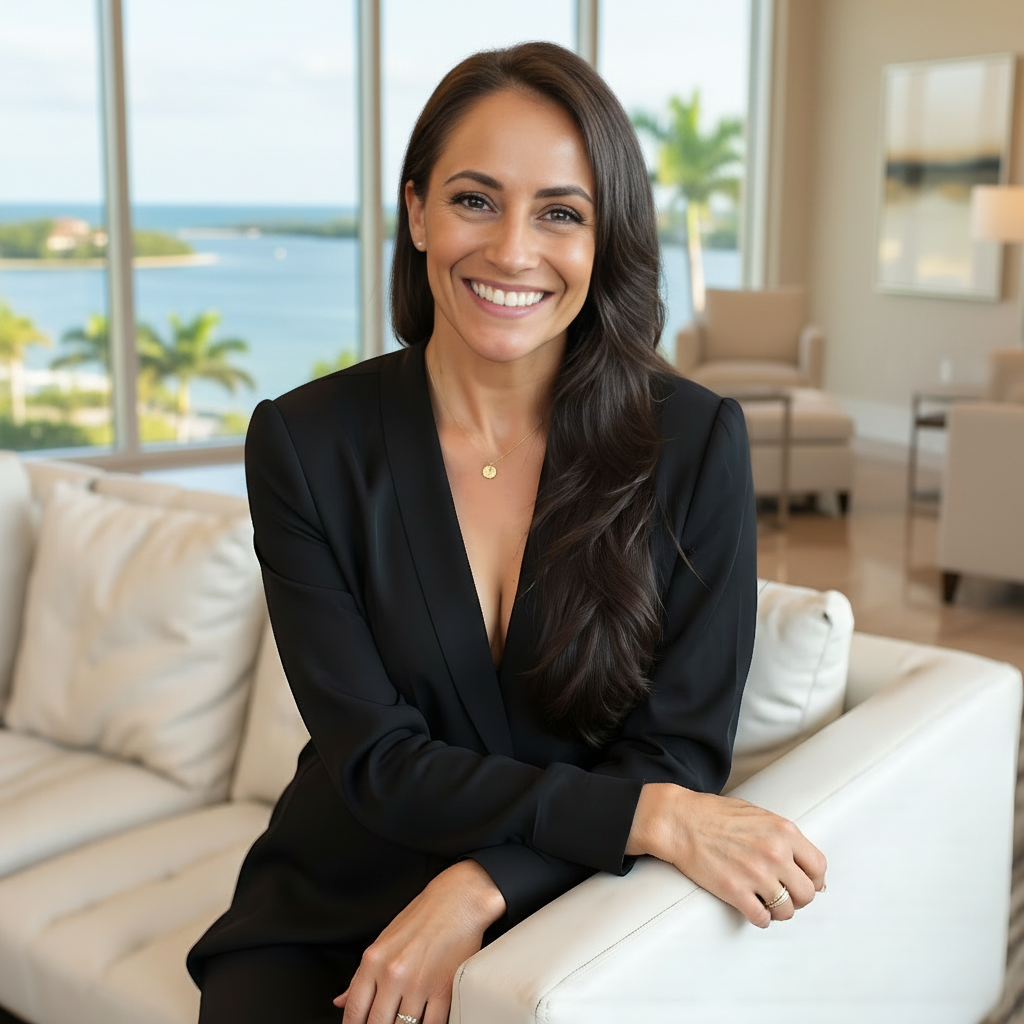
Kelly Fullick is a Sarasota-native Realtor with Coldwell Banker Realty. She specializes in helping out-of-state relocation buyers and Sarasota-area sellers with candid, education-first guidance. Kelly has closed 36+ transactions totaling over $18.6M across Sarasota and Manatee County since 2022, and holds a perfect 5.0-star rating on 25 Google reviews.
Ready to take the next step?
Let's Talk About Your Goals
Every situation is different. Schedule a no-pressure conversation with Kelly to get clear on your options.
941.260.7770
kelly@kellyfullick.com
Schedule a Consultation