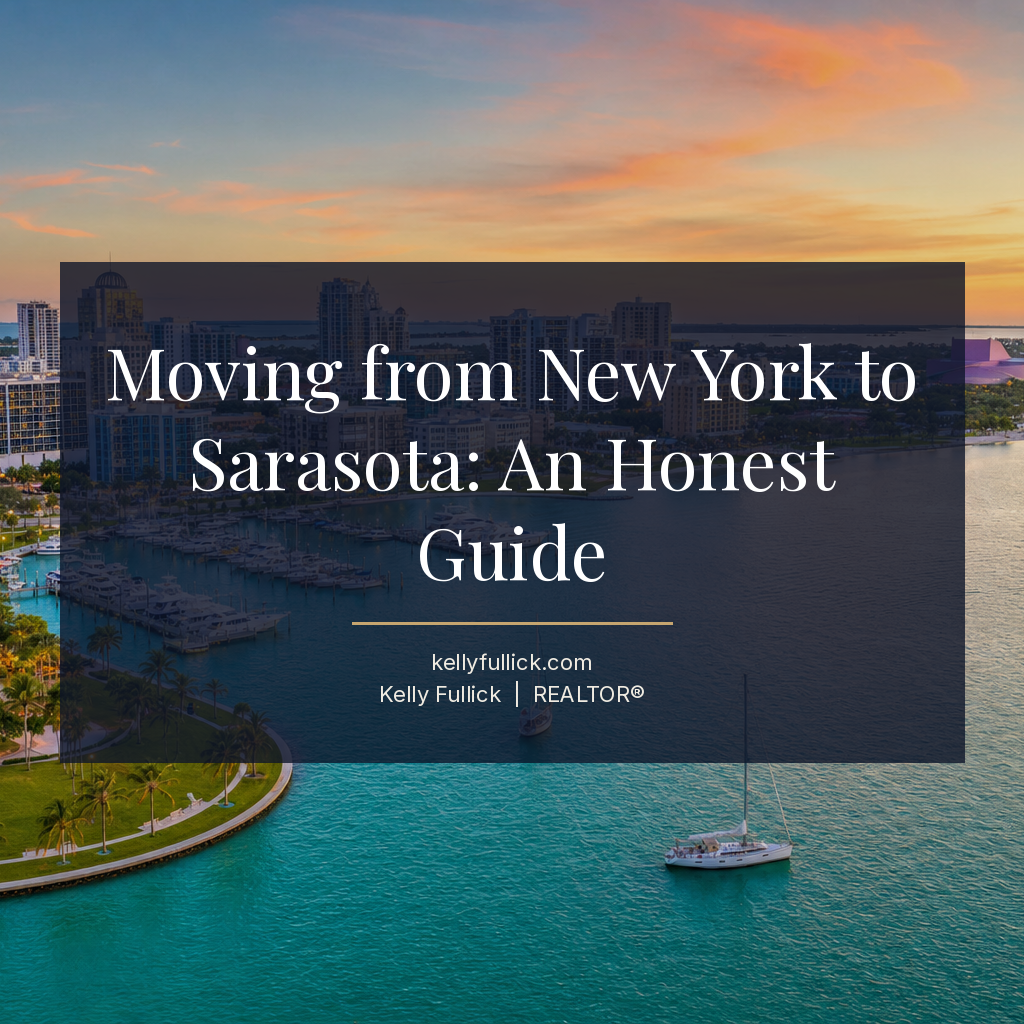
Moving from New York to Sarasota: An Honest Guide from a Sarasota Native
New York sends more people to Florida than any other state. A Sarasota-native Realtor with real New York ties — her mother lived there, her father played for the '69 Mets, she was signed by Ford Models at nine — breaks down the real tax, audit, insurance, and neighborhood math.
New York sends more people to Florida than any other state, and Sarasota is one of the places they land. If you're a New York homeowner reading this, you're not thinking about it alone — you're thinking about it at the same time as tens of thousands of other New Yorkers doing the same math this year.
I have a personal connection to New York that goes back further than my real estate license. My mother lived there. My father played for the New York Mets in 1969. Ford Modeling Agency signed me in New York when I was in fourth grade — a kid from Phillippi Gardens getting a callback from a Manhattan agency felt like a different planet. And last fall, I brought my own kids back to walk Central Park and stand in Times Square, the same streets I half-remember from being nine years old. New York isn't an abstraction to me. It's part of my story, which is probably why I understand what New Yorkers are actually giving up — and getting — better than most Florida agents do.
I've worked with out-of-state buyers making this exact move, and the real questions underneath the Google searches are almost always the same: not "is Sarasota nice" but how will my life be different for the better if making a jump to leave NY.
This is the honest guide — no "paradise" hype, no glossy relocation-brochure language. Just what a Sarasota-native Realtor with real ties to New York wishes every NY homeowner knew before making the move.
Why so many New Yorkers are actually moving to Sarasota
New York sends more people to Florida than any other state, and it isn't particularly close. In the most recent Census Bureau data, roughly 50,661 New Yorkers moved to Florida in a single year, more than any other state of origin (ClickOrlando/Census data, 2026). During the recent migration boom years, IRS data showed New York-to-Florida moves peaking even higher — one legal analysis cites over 88,300 New York taxpayers relocating to Florida across a two-year stretch, bringing an estimated $9.5 billion in adjusted gross income with them (McLaughlin & Stern, Shift of Residence/Domicile Report). New York's own Department of Taxation and Finance confirms Florida is the single largest net destination for departing New York tax filers, even as the annual numbers have moderated from the pandemic peak (NY Dept. of Taxation and Finance Migration Data).
The reason isn't the beach. New Yorkers have beaches. The reason is math — and increasingly, a sense that the math isn't getting better anytime soon.
The real financial picture: New York vs. Sarasota
Let me walk through the numbers the way I do with clients — for a normal upper-middle-income New York homeowner, not a hedge fund manager.
Property tax alone
New York's statewide effective property tax rate runs around 1.54% to 1.6% (CountryTaxCalc, 2026; PropertyTaxRates.org), but that average badly understates what suburban and upstate New Yorkers actually pay. Nassau County runs closer to 2.24%, Westchester around 2.07%, and upstate counties like Onondaga and Monroe frequently exceed 2.1%–2.4% (New York Calculator, 2026; AskDoss, 2026). Manhattan itself is the outlier — NYC's Class 1 effective rate sits closer to 0.88%–1.2% because of the city's unique assessment system (StreetEasy, 2026).
Florida's statewide average sits around 0.78% to 0.89% (Redfin, 2026; CountryTaxCalc) — and the Save Our Homes cap locks assessed value growth at 3% a year for life, once you file Homestead.
Practical example:
- A $900,000 Westchester colonial paying roughly $18,600/year in property tax at a 2.07% effective rate
- A comparable Sarasota home post-Homestead: $7,000–$8,500/year
That's $10,000–$11,000 back in your pocket annually, before you even touch income tax.
State income tax
New York's income tax runs from 4% up to 10.9%, and the top three brackets (9.65%, 10.3%, 10.9%) were recently extended through 2032 rather than sunsetting as originally planned (CPA Journal, January 2026; Anchin LLP). A dual-income Westchester or Long Island household earning $300,000 typically lands in the 6.85% bracket, paying somewhere in the $16,000–$20,000/year range in state income tax alone. If you're a New York City resident, add another 3.078%–3.876% in city income tax on top (SmartAsset, 2026).
Florida's state income tax: zero. Not "low." Zero — and no city income tax layered on top, either.
Estate tax
New York imposes its own state estate tax at a lower exemption threshold than the federal level — roughly $7.16 million in 2026, with a graduated rate up to 16% (TheTaxCalc, 2026). Florida has no state estate tax, no inheritance tax, and no gift tax.
The New York "exit" reality: audits are real
New York is famously aggressive about auditing residency claims. If you keep a New York apartment or house while claiming Florida domicile, expect the state to look hard at where you actually spent your nights — hotel records, EZ-Pass data, credit card geolocation, even doctor and dentist visit patterns have shown up in residency audits. New York's own reporting shows nearly 1,700 millionaires changed their address out of state in a single recent year (NY Dept. of Taxation and Finance), and the state doesn't let that revenue go quietly. New York also just enacted a "pied-à-terre tax" on high-value non-primary residences starting mid-2026, adding another wrinkle for anyone keeping a foothold in the city while establishing Florida residency (Holland & Knight, 2026).
Total annual tax delta
For a $300K-income household selling a $900K Westchester or Nassau home and buying a comparable Sarasota home, the annual tax delta commonly runs $25,000 to $40,000 in Florida's favor once you combine property tax, income tax, and the elimination of NYC city tax where applicable. Over a decade, that's a quarter to nearly half a million dollars. This is not a lifestyle upgrade. It's a financial restructuring.
What Sarasota is actually like (from a Sarasota native)
I've watched this town evolve for four decades, and I'll give you the real version, not the postcard.
What people from New York love
- The water is genuinely warm, not "warmer than the Rockaways" warm. From May through October you're in the Gulf without hesitation.
- The season runs opposite yours. Sarasota's busy social calendar is January through April — exactly when New York is grey, wet, and cold. Summer here is quiet.
- Real cultural depth, not a downgrade. If your version of a good weekend in New York was a MoMA visit, a walk through Prospect Park watching for warblers, or a Saturday at the Union Square Greenmarket, Sarasota has a genuine analog. The Ringling Museum is one of the top art museums in the Southeast, anchored by a permanent Rubens collection people fly in to see — think of it as your new MoMA-adjacent fix. Marie Selby Botanical Gardens on Sarasota Bay, with its world-renowned epiphyte collection and rotating art installations, is Sarasota's answer to the Brooklyn Botanic Garden. Celery Fields, a nationally recognized birding site, is your new Prospect Park for serious birders. The Sarasota Opera, Sarasota Ballet, Van Wezel Performing Arts Hall, and Asolo Repertory Theatre are legitimate, full-season institutions — not tourist filler. Sarasota was branded Florida's "cultural capital" long before it was known for anything else.
- The downtown gallery-walk energy. Palm Avenue and Burns Court have independent galleries, an indie cinema, and farm-to-table restaurants that wouldn't feel out of place in the West Village — just with parking. The year-round Saturday Farmers Market downtown has real energy, similar to Union Square's on a smaller, friendlier scale.
- Nature that surprises transplants. Myakka River State Park and Oscar Scherer State Park are 20-minute drives with alligators, bald eagles, and roseate spoonbills. Ted Sperling Park on Lido Key offers some of the best sunrise mangrove kayaking in the state. If your New York weekends involved Central Park runs or a train up to the Hudson Valley, your Sarasota weekends can carry that same rhythm — different landscape, same instinct.
- The medical infrastructure is real. Sarasota Memorial consistently ranks among Florida's top hospitals — this isn't a healthcare desert for retirees leaving NYC-area medical systems.
- You can drive anywhere in 25 minutes. After the Cross Bronx or the LIE, this alone changes your quality of life.
- The Legacy Trail — a 20-mile paved biking and walking trail from Sarasota through Osprey, Nokomis, and Venice. Flat, safe, constantly used. A real cycling culture, not a token bike lane.
What surprises New Yorkers (not always pleasantly)
- Summer is real and long. July and August bring daily thunderstorms and heavy humidity. Spend an actual July here before committing — not just a February "test week."
- Home insurance is a serious budget line. On barrier islands and older homes, combined homeowners and flood insurance can run $5,000–$15,000+/year. A newer CBS (concrete block) home in Flood Zone X in central Sarasota is far more reasonable, often $3,200–$5,500/year combined (Beyond Realty, 2026). Get this number before you fall in love with a house.
- Hurricanes are part of the deal. June through November, we watch the tropics. Preparation is routine, not panic, but this is a coastal state and storms do happen.
- You'll miss the fall. There is no substitute for a New England or Hudson Valley October, and Florida doesn't try to fake one. Plenty of transplants fly north every autumn just for the foliage. Plan for it; it's a real and healthy thing to want.
- The seasonal swing is intense. Mid-January through early April, Sarasota's population effectively doubles. Restaurants have hour waits, US-41 gets congested, and grocery stores get picked over. June through September, the town empties out and life gets a lot quieter.
- You'll lose subway-level walkability unless you choose carefully. Sarasota is not New York City. If walkability is non-negotiable, your neighborhood choice matters enormously (more on that below).
Best Sarasota-area neighborhoods for New York buyers
Every New York client wants something a little different — some want to replicate Manhattan's walk-everywhere life, some want Westchester's quiet acreage, some want the Hamptons on the Gulf.
If you want the "Manhattan-adjacent walkable" feel
Downtown Sarasota / Rosemary District. Walkable, restaurant-dense, condo and townhome inventory in the $500K–$2M range, close to the bayfront and the arts district. Popular with former NYC apartment dwellers who don't want to lose the ability to walk to dinner.
If you want the "Long Island / Westchester master-planned" feel
Lakewood Ranch. Sprawling, amenity-rich, top-rated schools, brand-new construction available alongside established sections. This is the community that most closely mirrors a well-run Westchester or Long Island suburb — just with a Florida climate and no property tax shock. Price range runs from mid-$400s condos to $2M+ estate homes.
If you want "Hamptons on the Gulf"
Siesta Key. Direct beach access, higher price point, a real resort-town social scene. This is where former Hamptons and North Fork buyers land, and it's also where insurance and flood-zone costs matter most — I run those numbers with clients before any offer goes in.
If you want "Westchester/Fairfield quiet without the taxes"
Palmer Ranch. Larger single-family homes, mature landscaping, established and quiet, an easy drive to both downtown and the beach. Usually $500K–$900K for a comfortable 3/2 or 4/3 — the closest thing Sarasota has to a settled, tree-lined Westchester street.
If you want new construction and better value
Wellen Park (Venice) or north Bradenton. Newer builds, lower price per square foot, a bit further from downtown but closer to the beach than most New York buyers expect. $400K–$700K for new 3–4 bedroom homes.
Actual costs of the NY → Sarasota move
Real numbers, not lowball estimates from a mover trying to win your business.
Interstate moving cost
New York City, Westchester, or Long Island to Sarasota runs roughly 1,200–1,300 miles. Full-service interstate movers typically deliver in 2 to 14 business days, depending on route and season (SafeBound Moving, 2026).
For a 3-bedroom household in 2026, expect $7,800 to $12,500 for full-service transport (Move Trust Hub). A 2-bedroom apartment or condo typically runs $5,400–$8,600. Add roughly $1,000–$1,500 to ship one car, and NYC-based moves sometimes carry a premium for city logistics (parking permits, elevator reservations, congestion fees).
Florida closing costs
For a buyer purchasing a $650,000 Sarasota home with a $520,000 mortgage:
- Doc stamps on the mortgage note: $3.50 per $1,000 of loan = ~$1,820
- Intangible tax on the note: $2.00 per $1,000 = ~$1,040
- Lender fees, title insurance, inspections, first-year insurance escrow: variable
- Total buyer closing costs typically run 2–5% of purchase price (Team Renick, 2026)
Total "beyond down payment" relocation cost for a typical NY buyer
Rough all-in for a $650K Sarasota home with a $520K mortgage:
$19,000 to $29,500 in one-time relocation costs (movers + closing costs + vehicle transfer + registration)
The largest variable is insurance escrow — barrier island and AE flood zone properties land at the higher end.
The Florida Homestead Exemption — file it the day you close
This is the single most valuable thing a new Florida homeowner does, and I see out-of-state buyers miss the window every year.
- What it does: Removes up to $50,000 from your home's assessed value for property tax purposes, and activates the Save Our Homes 3% cap on annual assessed value increases going forward.
- Who qualifies: You must own the home as of January 1, occupy it as your primary residence, and be a Florida resident.
- Deadline: File between January 1 and March 1 of the tax year for which you're claiming it.
- Where: Sarasota County Property Appraiser's office (online).
- Cost: Free.
If you close in October, you file the following January and claim Homestead for that year. I walk every buyer through this timeline before they close — it's a core part of the job, not an afterthought.
Establishing Florida residency (the New York audit angle)
New York is one of the most aggressive states in the country when it comes to residency audits, especially for high earners who keep a New York property. If you're maintaining a place in the city or the suburbs and claiming Florida domicile, plan for scrutiny.
The checklist that actually matters:
- File a Florida Declaration of Domicile with your county clerk (a real, recordable legal document)
- Get a Florida driver's license and register vehicles in FL
- Register to vote in Florida
- Update your mailing address on federal filings, brokerage accounts, retirement accounts, insurance policies
- File the Homestead Exemption
- Spend more than 183 days per year in Florida, and be prepared to document it — flight records, EZ-Pass, credit card geography, cell phone location data
- If you keep a New York residence, treat it visibly as a secondary home in every respect — no primary voter registration there, no primary driver's license, no primary-residence tax filings
Coordinate this with your CPA and estate attorney. Given New York's audit posture and the new pied-à-terre tax on higher-value non-primary residences, doing this cleanly from day one saves real money and real headaches down the road (Holland & Knight, 2026).
When most New York buyers actually pull the trigger
Patterns I see consistently with New York clients:
- After the January/February tax bill or reassessment notice lands. This is the single biggest trigger I see — a fresh number on paper does more than any sales pitch.
- Right after a "test winter." Clients fly down in January or February, spend two or three weeks, and make the decision somewhere over Georgia on the flight home.
- Post-milestone timing. Empty nesters after the last kid leaves for college, or retirees within a year or two of leaving full-time work, tend to move in late spring or early summer to be settled well before the next northeast winter.
Sarasota inventory shifts seasonally too — summer (June through September) typically brings more negotiable pricing and less competition, which benefits New York buyers who don't need to be here by January.
How I work with New York buyers
If you're seriously considering this move, here's what I actually do:
- We start with a call, no pressure. I answer whatever's on your mind — market conditions, neighborhoods, insurance realities, hurricane prep, tax mechanics, timing.
- I send honest, tailored neighborhood breakdowns based on what you actually want — walkable, water, gated, quiet, new construction — not a generic MLS dump.
- We do a real scouting day. I typically spend a full day driving New York clients through 3–4 neighborhoods so you feel the actual difference between Palmer Ranch and Lakewood Ranch, or Downtown and Siesta Key. Photos flatten everything; driving it doesn't.
- We run real insurance and tax numbers on real houses before you make an offer, not after inspection — so there are no closing-week surprises.
- I coordinate remotely when needed. Many of my New York clients are managing this from 1,200 miles away. FaceTime walkthroughs, drive-by videos, and detailed video tours let you vet properties without flying down every weekend.
Track record you can verify
I've been a licensed Florida Realtor with Coldwell Banker Realty since September 2022. Since then I've closed 34 transactions totaling over $17.7 million in Sarasota and Manatee County, with an average sale price around $520,000 — from starter homes at $145K to luxury properties over $1M. My Google review rating is 5.0 stars across 25 reviews.
I'm Sarasota-born and Sarasota-raised, which matters when you want an honest answer to "is that neighborhood actually walkable" or "is that HOA reasonable." And because New York has been part of my own life since childhood — my mother's years there, my father's season with the Mets, my own start with Ford Models at nine years old, and walking Central Park with my kids just last fall — I understand what you're actually leaving behind, not just what you're gaining.
Ready to talk?
If you're a New York homeowner seriously considering Sarasota, I'd love to be the person you call. No pressure, no aggressive follow-up, no auto-drip campaign pretending to be a relationship. Just an honest conversation with a Sarasota native who has real New York roots and has done this before with buyers like you.
📞 941-260-7770 — call or text ✉️ Kelly@kellyfullick.com 🌐 kellyfullick.com
Whenever you're ready. I'll be here.
About Kelly Fullick
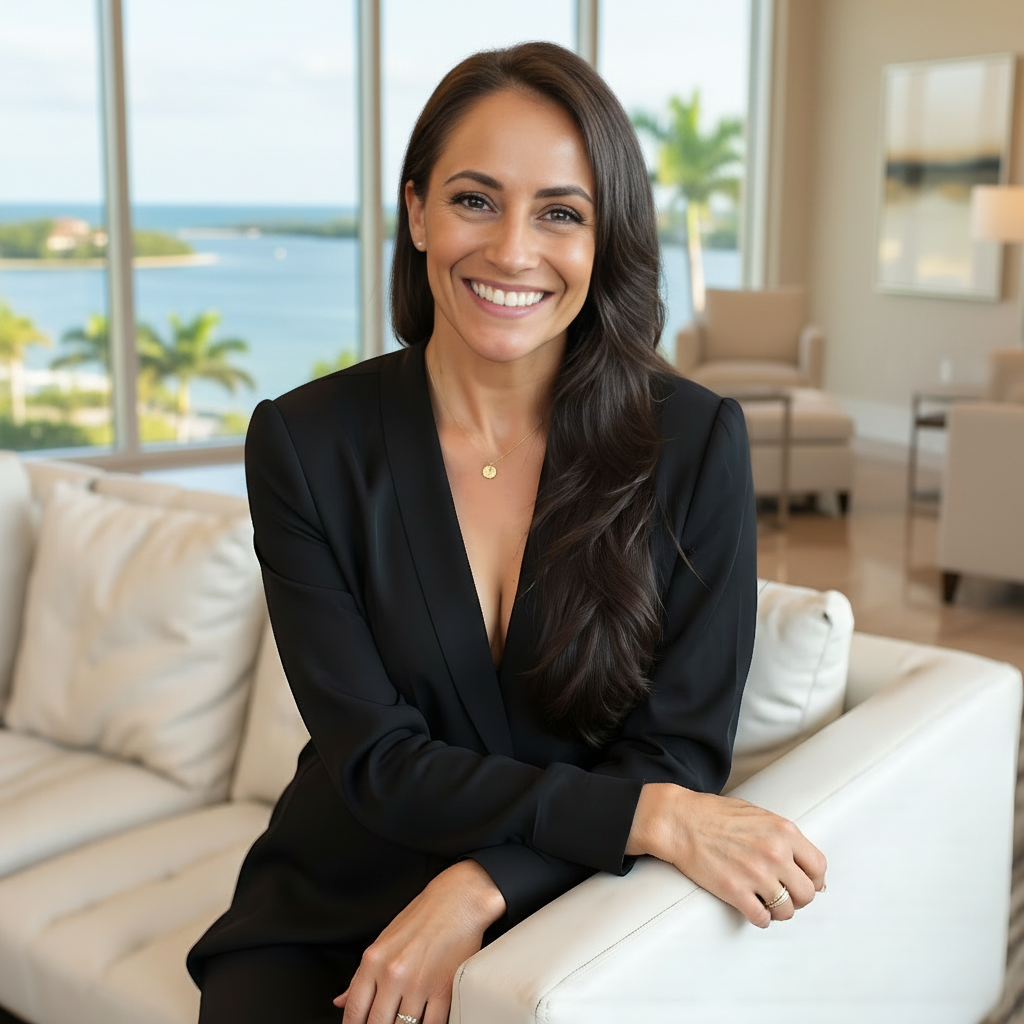
Kelly Fullick is a Sarasota-native Realtor with Coldwell Banker Realty. She specializes in helping out-of-state relocation buyers and Sarasota-area sellers with candid, education-first guidance. Kelly has closed 34+ transactions totaling over $17.7M across Sarasota and Manatee County since 2022, and holds a perfect 5.0-star rating on 25 Google reviews.
Ready to take the next step?
Let's Talk About Your Goals
Every situation is different. Schedule a no-pressure conversation with Kelly to get clear on your options.
941.260.7770
kelly@kellyfullick.com
Schedule a Consultation